






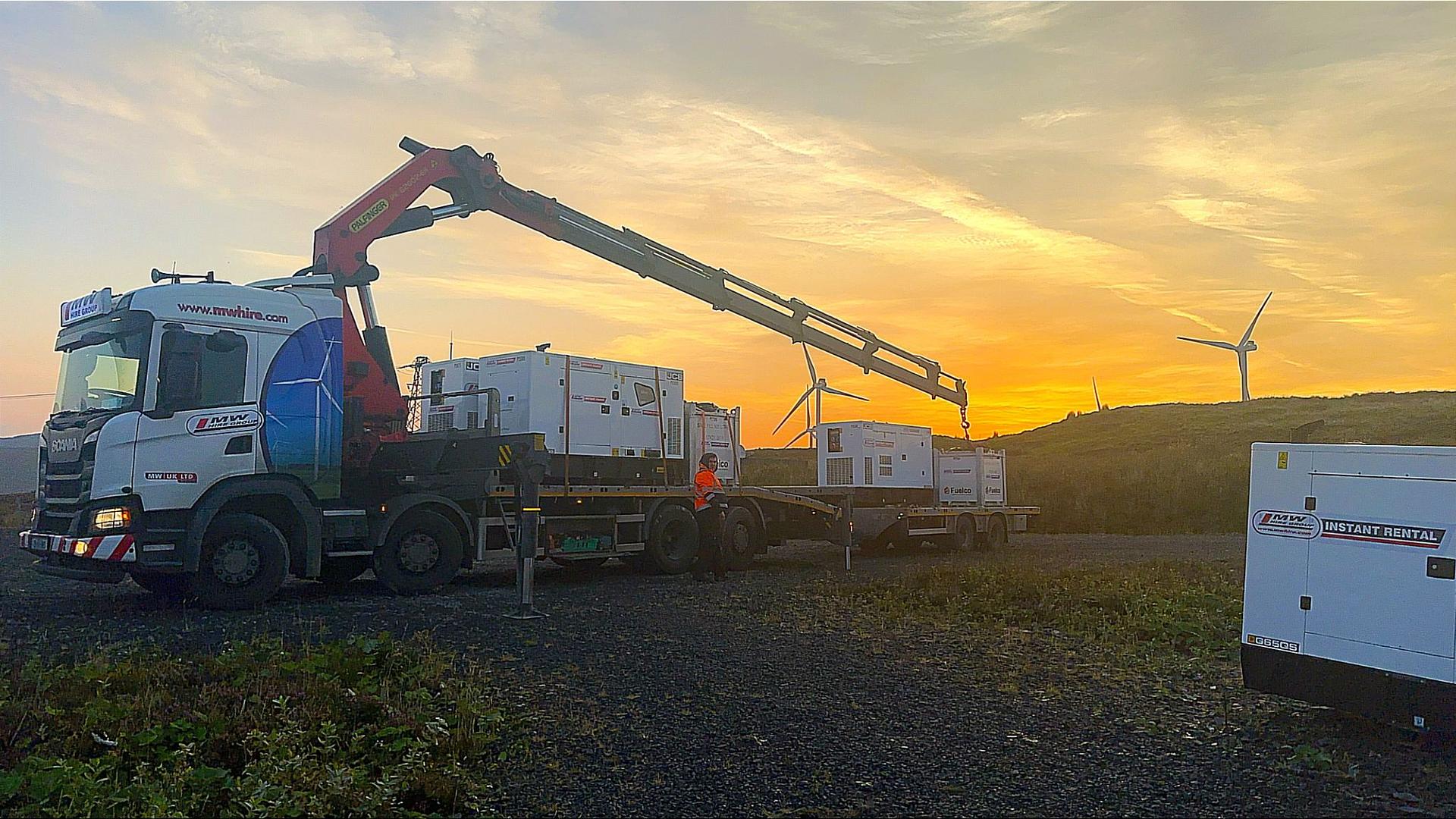
Wind Farms in Ireland: Why Reliable Site Power Matters—and How Pramac Battery Banks Can Cut Costs
Ireland’s wind farms have become a cornerstone of the country’s renewable energy strategy. With strong Atlantic winds and continued investment in onshore and offshore projects, Irish wind energy is helping businesses and communities reduce dependence on imported fossil fuels while supporting climate goals. Yet behind every turbine and every megawatt exported to the grid, there is a practical operational requirement that is often overlooked: reliable, well-managed site power.
From construction and commissioning through day-to-day operations and maintenance, wind farms in Ireland depend on auxiliary power for critical systems. When that power is unstable, expensive, or difficult to supply in remote locations, project timelines and performance can suffer. This is where modern battery energy storage—especially robust, site-ready solutions like Pramac battery banks—can deliver measurable operational and financial benefits.
The Growth of Wind Farms in Ireland—and the Operational Reality on the Ground
The headline story around wind energy in Ireland often focuses on turbine capacity, grid connections, and generation targets. But wind farm operators and contractors know that performance is also shaped by the infrastructure that supports the turbines: communications, control systems, lighting, security, tools, temporary facilities, and essential services.
Many wind farm sites are in exposed, rural areas where logistics are challenging. Weather can disrupt access, grid constraints can limit flexibility, and downtime can quickly become expensive. Even when a site is generating substantial power, the facility still needs dependable auxiliary power to keep critical functions operating safely and efficiently.
Why “Site Power” Is So Important for Wind Farm Performance
Wind turbines generate electricity, but wind farms still require consistent power to operate and maintain the full system. Site power is essential across three main phases:
1) Construction and Commissioning
During build-out, power is needed for welfare units, site offices, lighting, security, cranes and tools, battery charging, and commissioning equipment. Temporary power solutions are often deployed before full grid connection is established, and costs can rise quickly when diesel generators run continuously or inefficiently.
2) Operations and Maintenance (O&M)
Operational wind farms rely on auxiliary electricity for SCADA and communications, substation equipment, safety and emergency systems, condition monitoring, and heating/ventilation in cabinets where required. Even brief disruptions can create risks and delays—especially when weather windows for maintenance are tight.
3) Resilience During Grid Events and Constraints
Ireland’s grid is evolving rapidly, and many regions face constraints that can affect dispatch, curtailment, and connection performance. While grid-level solutions are expanding, individual sites still benefit from local resilience—particularly for maintaining critical loads and preventing avoidable downtime.
Common Challenges: Cost, Reliability, and Logistics
When wind farm sites rely heavily on conventional temporary power, several cost and risk factors appear repeatedly:
- High fuel and transport costs for diesel in remote or difficult-to-access locations
- Inefficient generator loading when loads are variable or low overnight, increasing consumption and wear
- Noise and emissions that can affect workforce comfort, planning requirements, and local stakeholder perception
- Maintenance burden from long generator run-hours, especially during extended construction schedules
- Downtime risk if power to critical systems is interrupted or unstable
These are practical problems with practical solutions—particularly when battery banks are integrated into a hybrid power approach.
How Pramac Battery Banks Support Wind Farm Sites
Pramac battery banks are designed to provide flexible energy storage for industrial and site applications, including renewable energy projects. For wind farms in Ireland, they can be used as a standalone source for certain loads or integrated with generators and grid connections to improve efficiency and resilience.
Cleaner, Quieter Power for Essential Loads
Battery banks can supply low-to-medium loads without running a generator continuously, which is especially valuable for overnight power, security systems, communications equipment, and site offices. This reduces noise and emissions while maintaining dependable electricity for critical functions.
Hybrid Operation That Reduces Generator Runtime
One of the strongest use cases for battery energy storage on wind farm sites is hybridization—pairing a battery bank with a generator. In a hybrid setup, the battery can handle fluctuating demand and allow the generator to run only when needed and at more efficient operating points.
In practice, this can translate into:
- Lower diesel consumption by reducing unnecessary runtime and idling
- Reduced maintenance costs due to fewer run-hours and service intervals
- Improved reliability by smoothing load changes and supporting stable power delivery
Peak Shaving and Better Control of Site Power Costs
Where grid-connected temporary or permanent supplies include demand-based charges, battery banks can help manage peak loads. By discharging during high-demand moments and recharging during lower-demand periods, battery storage can support a more controlled load profile. This approach, often referred to as peak shaving, can contribute to improved cost predictability for site operations.
Fast Deployment and Modular Scalability
Wind projects are schedule-driven, and delays in power availability can ripple across the entire build plan. Modular battery solutions can be deployed quickly and scaled as site requirements change—from early-stage construction to later commissioning and O&M. This flexibility is valuable on multi-turbine projects where load needs may evolve by phase and location.
Support for Resilience and Continuity
Battery energy storage can provide continuity for priority loads during outages or transitions. For wind farm operators, that can help protect communications, monitoring systems, and essential controls—reducing the risk of operational disruption and supporting safer, more controlled site management.
Where the Savings Come From: A Practical View
For decision-makers focused on cost control, the value of Pramac battery banks is typically driven by a combination of direct and indirect savings:
- Fuel savings: Less diesel burned through reduced generator runtime and better generator loading
- Maintenance savings: Fewer service hours and reduced wear on generators and related equipment
- Operational efficiency: More stable power for site systems, fewer disruptions, improved working conditions
- Reduced downtime exposure: Better resilience for critical loads and fewer power-related interruptions
- Improved sustainability profile: Lower on-site emissions and noise, supporting environmental and stakeholder goals
The most accurate way to quantify savings is to review a site’s load profile, generator run-hours, fuel logs, and operational constraints. In many cases, even modest reductions in generator runtime can yield meaningful cost improvements over a construction season or across ongoing O&M activities.
Choosing the Right Battery Energy Storage Approach for an Irish Wind Farm Site
Battery banks are not one-size-fits-all. The right configuration depends on your loads, location, and operating plan. When evaluating a battery energy storage solution for a wind project in Ireland, consider:
- Load types and peaks: Identify critical loads, variable demand, and peak power requirements
- Runtime needs: Determine how long the site must operate without generator or grid support
- Integration: Plan how storage will work with existing generators, grid connections, and site distribution
- Monitoring and control: Prioritize visibility and operational control for efficient energy management
- Logistics and safety: Ensure the solution is suitable for site conditions, access constraints, and safety protocols
Wind Farms in Ireland: A Stronger, Smarter Power Strategy
As Irish wind energy continues to expand, the operational details that keep projects efficient and resilient matter more than ever. Reliable site power supports safety, performance, and uptime—whether you are building new capacity or optimizing an operating asset.
Pramac battery banks offer a practical pathway to reduce generator dependence, improve site power stability, and unlock savings through smarter energy management. For wind farm owners, EPC contractors, and O&M teams, battery energy storage can be a decisive advantage—helping deliver cleaner operations, more predictable costs, and stronger continuity in the demanding conditions typical of wind farms in Ireland.