






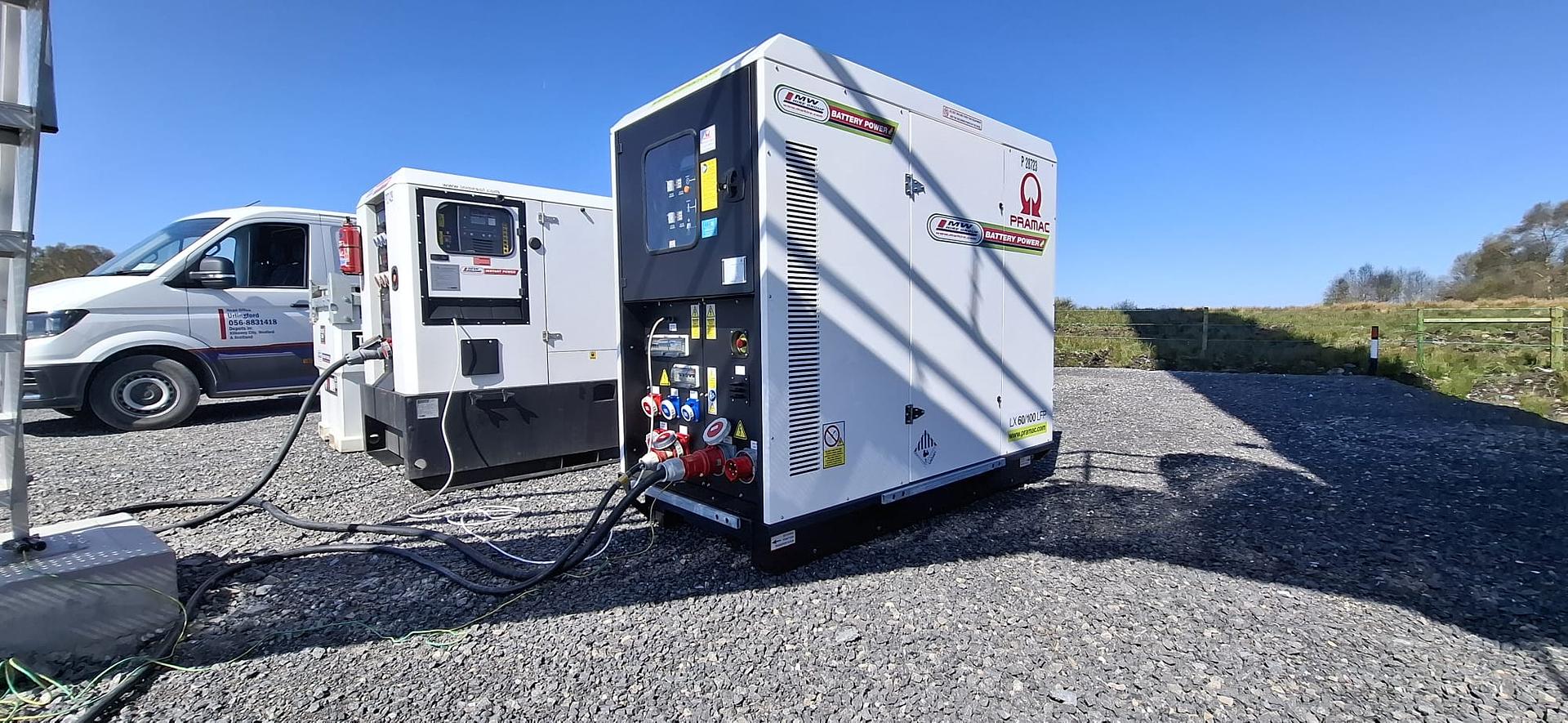
Pramac Battery Banks: Lower Energy Costs, Cleaner Power, and Smarter Resilience for Modern Businesses
Energy costs, grid instability, and sustainability requirements are reshaping how organizations power worksites, facilities, and critical operations. For many businesses, the next leap forward is not simply switching suppliers or installing more generation—it is adding energy storage. Pramac battery banks (often referred to as battery energy storage systems) help businesses store electricity and use it when it delivers the most value: during peak tariffs, at times of grid constraint, or alongside renewable power sources such as solar.
This article explores the key benefits of Pramac battery banks, how they can reduce operating costs, and how they enable more renewable energy use without sacrificing performance.
What Are Battery Banks and Why Are Businesses Investing Now?
A battery bank is a stored-energy resource that charges from the grid, on-site generation (such as solar PV), or a generator, then discharges power when needed. In business contexts, battery banks are increasingly used to:
- Lower electricity bills through peak shaving and tariff optimization
- Reduce reliance on diesel generators in temporary or remote locations
- Provide resilient backup power for critical loads
- Increase self-consumption of renewable power, especially solar
- Stabilize power quality for sensitive equipment
Pramac battery banks are designed for professional environments where reliability, performance, and deployability matter—making them relevant across industrial sites, construction, telecom, events, logistics, and commercial facilities.
Core Benefits of Pramac Battery Banks for Business Operations
1) Direct Cost Savings Through Peak Shaving and Demand Management
In many markets, a large share of commercial electricity bills is driven not only by total energy used (kWh), but by peak demand (kW) and the timing of consumption. Battery banks can reduce peak demand by supplying power during high-load intervals, then recharging when loads are lower or when tariffs are cheaper.
Common business outcomes include:
- Lower demand charges by cutting short, high-power spikes
- Reduced exposure to peak pricing by shifting consumption to off-peak hours
- More predictable energy costs through controlled discharge strategies
For facilities with intermittent heavy loads—such as machinery start-ups, temporary power surges, or EV fleet charging—battery-assisted power can be a practical way to reduce billing volatility and improve total cost of ownership.
2) Reduced Diesel Consumption in Hybrid Power Setups
On worksites and remote applications, diesel generators often run at inefficient load levels, especially when demand fluctuates. A battery bank can absorb load variations and allow the generator to run less often, run at more efficient points, or be downsized in some configurations.
That translates into potential savings and operational improvements, such as:
- Lower fuel spend by reducing generator runtime
- Reduced maintenance costs due to fewer operating hours and less wear
- Quieter operation during periods when the battery supplies power
- Lower emissions from reduced fuel consumption
For businesses operating in urban environments or regulated zones, cutting generator runtime can also support compliance objectives related to noise and local emissions.
3) More Renewable Power Through Higher Self-Consumption
Solar and other renewables are increasingly attractive, but they do not always align perfectly with operating schedules. Many businesses generate solar power during the day and consume more power later—when the sun is down, tariffs rise, or operations scale up.
A Pramac battery bank helps close that gap by storing renewable energy when it is available and dispatching it when it is needed. Benefits include:
- Higher solar self-consumption instead of exporting excess energy at lower feed-in rates
- Reduced reliance on grid power during evenings or high-tariff periods
- Better utilization of on-site renewables without changing core workflows
In practical terms, energy storage is one of the most effective ways to increase the share of renewable energy in daily operations while maintaining reliable power delivery.
4) Business Continuity and Backup Power Resilience
Downtime is expensive. Even short outages can disrupt production, spoil inventory, interrupt data operations, or create safety risks. Battery banks can provide backup power for critical loads and can be integrated into broader resilience plans.
Depending on the site design, batteries can support:
- Instant or near-instant power support for sensitive equipment
- Bridging power while a generator starts or transitions
- Backup for targeted circuits such as lighting, communications, servers, or security systems
This can be particularly valuable for distributed operations (retail, logistics, telecom) where a single outage can cascade into service disruptions.
5) Improved Power Quality for Sensitive Loads
Voltage fluctuations and transient events can harm equipment and reduce operational efficiency. Battery systems can help stabilize supply, especially in environments with variable loads or long cable runs. Power stability is a frequent concern for:
- IT and communications equipment
- Testing labs and instrumentation
- Automated production lines
- Temporary installations and events
By smoothing peaks and supporting steady output, a battery bank can reduce nuisance shutdowns and help protect critical assets.
Where Pramac Battery Banks Deliver the Most Value: Common Use Cases
Battery energy storage is not one-size-fits-all. The strongest business case typically appears when at least one of the following is true:
- High peak demand drives a significant share of the electricity bill
- Renewable generation exists on-site and excess energy is routinely exported
- Generator reliance is high due to remote operations or temporary power needs
- Operational risk from outages justifies investment in resilience
- Noise or emissions constraints limit generator use in certain hours or locations
Construction sites, industrial facilities, commercial buildings, events, and remote operations often see immediate operational benefits from a well-sized storage system integrated into the power plan.
How Businesses Save Money with Battery Banks: A Practical Breakdown
When evaluating cost savings, most organizations should look beyond the headline “energy arbitrage” and consider multiple value streams. A battery bank can generate returns through a combination of:
- Peak shaving: reducing demand charge exposure
- Tariff shifting: charging off-peak and discharging on-peak (where applicable)
- Fuel displacement: reducing generator runtime and consumption
- Maintenance reduction: fewer generator service intervals and repairs
- Downtime avoidance: reducing operational interruptions and associated losses
The best results typically come from a right-sized system paired with intelligent operating logic—aligned with the facility load profile and the local tariff structure.
What to Consider Before Choosing a Pramac Battery Bank
To capture full value, assess the following elements early:
- Load profile: Understand peak demand, daily patterns, and critical loads
- Power environment: Grid reliability, available generation (solar, generator), and site constraints
- Operational goals: Cost savings, emissions reduction, noise limits, backup resilience, or all of the above
- Deployment needs: Permanent installation versus mobile/temporary requirements
- Integration plan: How the battery bank will coordinate with solar inverters, generators, or site distribution
A clear technical and financial assessment ensures the system is matched to real operational needs, improving ROI and avoiding underutilization.
Building a Cleaner Energy Strategy Without Compromising Performance
For businesses under pressure to reduce emissions, meet ESG targets, and control costs, energy storage is becoming a foundational technology. Pramac battery banks can help organizations move toward more renewable power by increasing solar self-consumption, reducing generator dependence, and improving resilience.
Whether your priority is lowering demand charges, limiting diesel use on-site, or strengthening business continuity, a battery bank can be a practical, scalable step toward a more efficient and sustainable energy strategy.
Next step: Start with a site energy review—your tariff structure, peak demand windows, generator usage, and renewable generation potential will quickly indicate where a Pramac battery bank can deliver the strongest financial and operational return.