






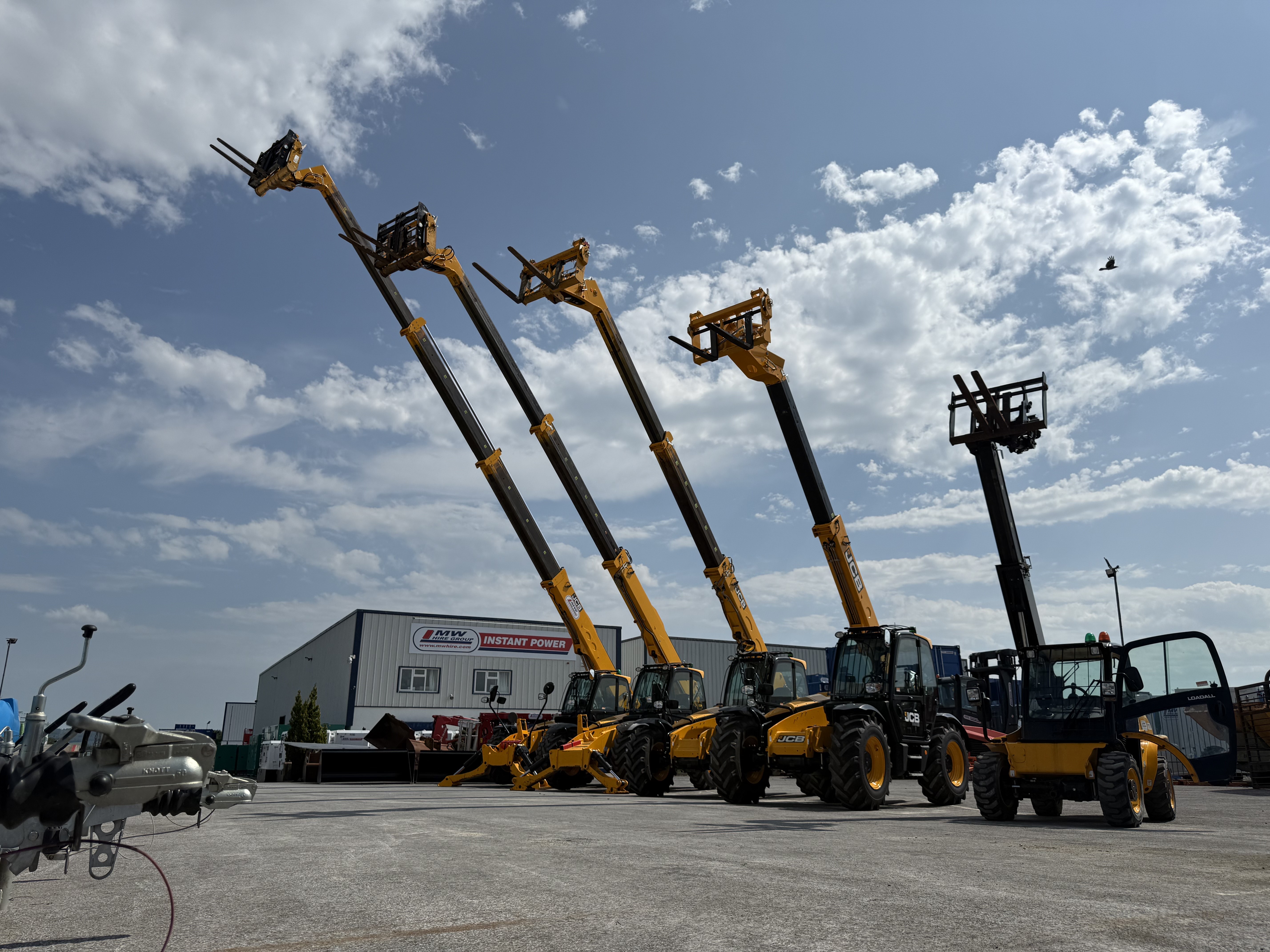
JCB Telehandlers: Key Benefits, Applications, and What to Look for When Buying or Hiring
When businesses need to lift, move, and place materials quickly and safely, a JCB telehandler (also known as a telescopic handler) is often the most versatile choice on site. From construction projects and industrial yards to agriculture and landscaping, JCB Loadall telehandlers are widely used for their reach, lifting capability, and ability to work with a broad range of attachments.
This guide covers the main benefits of JCB telehandlers, common use cases, and practical tips to help you choose the right machine for purchase or rental while keeping performance, safety, and total cost of ownership in mind.
What Is a JCB Telehandler?
A telehandler combines the lifting function of a forklift with the extended reach of a boom lift. Unlike a traditional forklift, a telehandler uses a telescopic boom to lift loads to height and reach forward over obstacles. Many models also offer 4-wheel drive and multiple steering modes, making them well-suited to uneven ground and tight worksites.
JCB is one of the best-known manufacturers in this category, with the JCB Loadall range designed for demanding environments across construction, agriculture, and material handling.
Top Benefits of JCB Telehandlers
1) Versatility Across Jobs and Industries
One of the biggest reasons businesses choose a JCB telehandler is its ability to do more than one job with the right attachment. A telehandler can often replace (or reduce reliance on) multiple machines by handling lifting, loading, placing, and carrying tasks.
Common tasks include moving pallets, lifting bulk bags, loading trucks, placing roof trusses, handling bales, and feeding materials to elevated work areas.
2) Impressive Reach and Lift Performance
Reach is where a telehandler stands apart. The telescopic boom allows operators to lift to height and place loads with forward outreach. This helps reduce manual handling, improves productivity, and supports safer placement of materials where access is limited.
When comparing options, pay close attention to the machine’s lift capacity, maximum lift height, and forward reach. These figures should always be assessed in relation to the load chart, which shows safe capacities at different boom angles and extensions.
3) Strong Site Mobility and Traction
Many construction and agricultural sites feature uneven surfaces, soft ground, slopes, and confined working areas. Telehandlers are designed for these conditions, with features such as 4-wheel drive and multiple steering modes (including crab steering on many models) to support maneuverability.
This mobility can reduce delays caused by repositioning equipment and improve efficiency when moving materials across larger sites.
4) Attachment Options That Expand Capability
A major advantage of JCB telehandlers is the ability to switch attachments to match the job. This flexibility is valuable for businesses that handle varied projects or seasonal workloads.
- Forks for pallet handling and general lifting
- Buckets for bulk materials and loading
- Jib and hook for suspended loads (where permitted and correctly configured)
- Grapples for waste, brush, or agricultural handling
- Man-baskets for access tasks (only when approved, compatible, and operated to regulations)
For best results, confirm attachment compatibility, hydraulic requirements, and any changes to safe working loads. Using the correct attachment helps protect the machine, the operator, and your overall productivity.
5) Improved Productivity and Reduced Handling Time
On busy sites, the biggest cost is often time. A telescopic handler can streamline workflows by loading and unloading vehicles faster, feeding workfaces efficiently, and reducing the number of machine movements required to place materials.
For contractors and yard operators, that can translate to shorter job durations, fewer bottlenecks, and better utilization of labor.
6) Operator Comfort and Safety Features
Telehandler performance depends heavily on the operator’s ability to work accurately and consistently. Modern JCB telehandlers are typically designed with visibility, control layout, and cab comfort in mind, helping reduce fatigue during long shifts.
Safety features vary by model and configuration but may include stability systems, load management aids, improved lighting packages, and ergonomic controls. Regardless of equipment, operator training and correct machine selection remain essential for safe operation.
Common Applications for JCB Telehandlers
Construction
In construction, a JCB telehandler is often used for moving bricks and blocks, placing materials on upper floors, positioning roof elements, and supporting general material handling on site. Telehandlers are particularly helpful where reach is needed over scaffolding, fencing, or partially completed structures.
Agriculture
On farms, telehandlers are commonly used for bale handling, feed management, bulk bag lifting, and general yard tasks. With the right attachment setup, a telehandler can become an all-season workhorse for mixed operations.
Industrial Yards and Logistics
For industrial yards, timber merchants, and distribution sites, telehandlers can handle pallet loads, support stock movement, and assist with loading/unloading. Their reach can be especially useful when stacking materials or working across confined loading zones.
Buying vs Hiring a JCB Telehandler: Which Makes Sense?
If your workload is steady and predictable, buying can be a smart investment—especially if you plan to keep the telehandler for several years and maintain it on a structured schedule. If workloads vary, JCB telehandler hire can provide flexibility and help you match the machine to each project.
Consider these factors when deciding:
- Utilization: How many hours per month will the telehandler work?
- Job requirements: Do you need specific lift height, reach, or attachments?
- Cash flow: Would rental or finance better support your budget?
- Support: Access to servicing, parts availability, and downtime management
If you’re searching for a JCB telehandler for sale, comparing total cost of ownership—not just purchase price—helps you make a better long-term decision.
What to Look for When Choosing a JCB Telehandler
To select the right machine for your site, focus on performance and compliance rather than headline figures alone.
- Lift capacity and load chart: Ensure the machine can safely lift at the boom extensions you’ll actually use.
- Lift height and forward reach: Match the telehandler to your building heights, loading bays, or stacking needs.
- Power and efficiency: Look for productivity that suits your duty cycle, with fuel efficiency and emissions compliance appropriate to your region.
- Tyres and traction: Choose the right tyres for ground conditions to reduce getting stuck and improve stability.
- Attachments and hydraulics: Confirm auxiliary hydraulics, quick hitch compatibility, and attachment availability.
- Serviceability: Easy access for daily checks can support uptime and reduce maintenance delays.
Maintenance and Safe Operation: Protect Uptime and People
Like any heavy equipment, telehandlers perform best with consistent inspections and correct operation. Daily checks (fluids, tyres, forks/attachments, lights, and safety systems) can prevent avoidable downtime. Operators should be trained and familiar with the specific model, especially regarding load charts and stability limits.
Most importantly, never exceed rated capacities, and always follow site rules for lifting operations, traveling with loads, and working at height.
Final Thoughts: Why JCB Telehandlers Remain a Smart Choice
A JCB telehandler is a practical investment for businesses that need reliable lifting performance, strong site mobility, and genuine multi-purpose capability. With the right configuration, it can improve productivity across construction, agriculture, and material handling—while supporting safer, more efficient workflows.
If you’re evaluating a JCB Loadall telehandler for your fleet, start by mapping your typical loads, lift heights, and reach requirements, then choose the model and attachments that best fit real site conditions. Done correctly, the result is a machine that delivers measurable value every day it is on the job.