






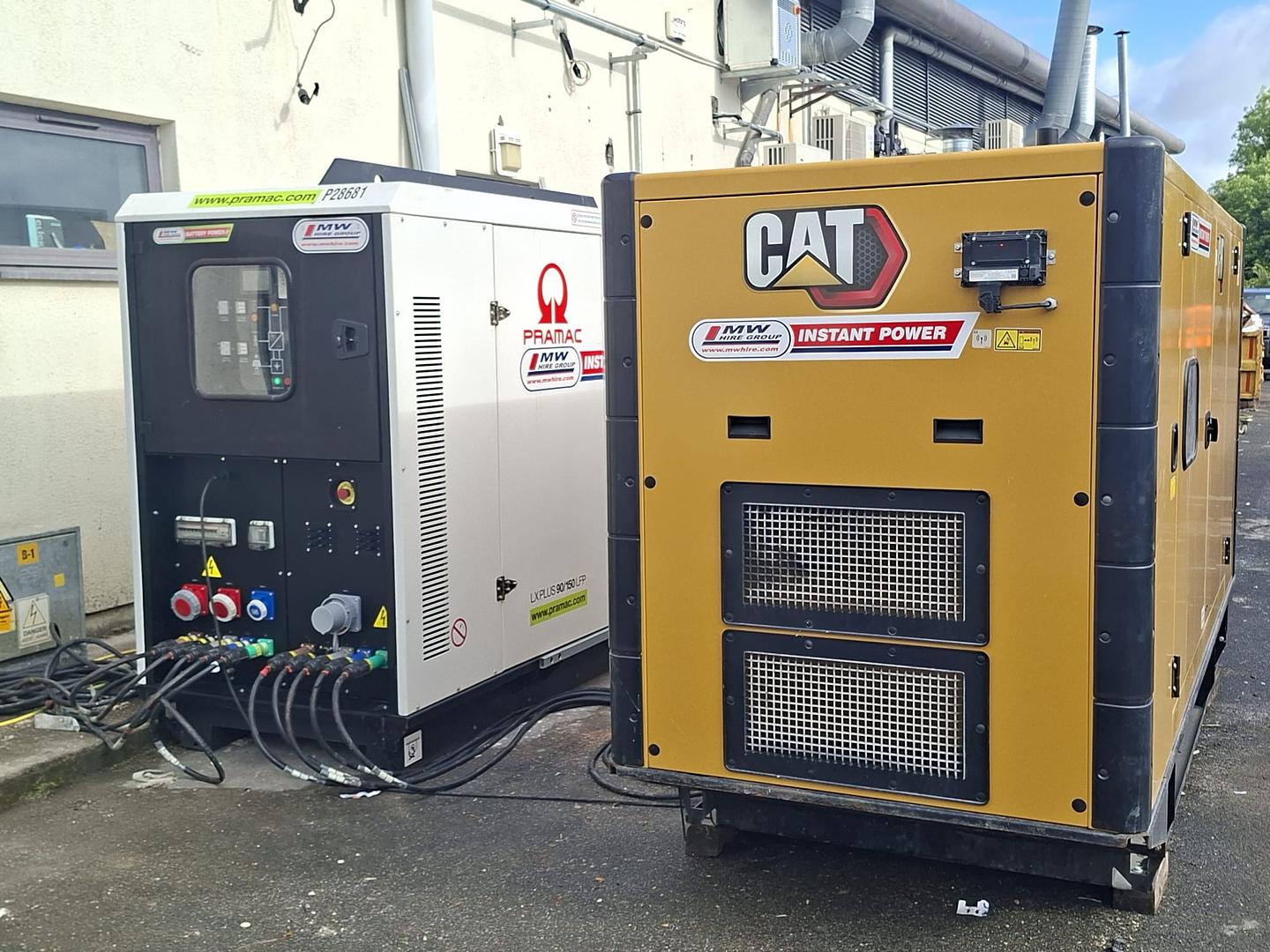
Pramac Battery Banks: How They Work with Generators to Cut Fuel Costs and Improve Power Quality
Rising fuel prices, tighter emissions requirements, and the need for quieter, more reliable temporary power have pushed many businesses to rethink the traditional “generator-only” approach. A practical solution is a hybrid power system that combines a generator with a battery energy storage system (BESS). Pramac battery banks are designed for this purpose: storing electrical energy and delivering it when needed so your generator can run less often, run more efficiently, and respond better to changing loads.
This article explains how Pramac battery banks work alongside a generator, the benefits you can expect, and where hybrid generator-and-battery setups deliver the strongest return—especially on sites with variable demand such as construction, events, utilities, and industrial facilities.
What Is a Pramac Battery Bank (Battery Energy Storage System)?
A battery bank, often referred to as a battery energy storage system, is more than a stack of batteries. In a typical Pramac battery storage solution, the system integrates:
- Battery modules that store energy (commonly lithium-based chemistry in modern systems).
- Power electronics (inverter/charger) to convert energy between AC (site power) and DC (battery storage).
- Energy management controls that coordinate battery charge/discharge and generator operation.
- Protection and monitoring for safe operation, temperature management, and performance tracking.
When paired with a generator, the battery bank becomes a “buffer” that smooths spikes, supports short-term peaks, and supplies quieter power during low-demand periods—reducing the generator’s runtime and improving overall efficiency.
How a Pramac Battery Bank Works Alongside a Generator
In a hybrid setup, the generator and battery bank share the job of supplying your load. The control system continuously monitors site demand and decides when to:
- run the generator at an efficient load point,
- charge the battery bank,
- discharge the battery bank to support the load, or
- shut the generator off entirely for “silent” operation.
Step-by-Step: Typical Operating Scenarios
1) Start-up and initial demand
When power is needed, the system can draw from the battery bank immediately. If the load is sustained or rises beyond a set threshold, the generator starts and takes over, with the battery smoothing the transition.
2) Load leveling (smoothing fluctuations)
Many sites have uneven demand: tools start and stop, pumps cycle, cranes lift intermittently, or lighting changes at dusk. The battery bank absorbs these fluctuations so the generator is not constantly ramping up and down. This improves power stability and reduces wear.
3) Peak shaving (covering short, high peaks)
Short peaks can force operators to oversize generators “just in case.” With a battery bank, the generator can be sized closer to the average load, while the battery supplies extra power during brief peaks. Once demand drops, the battery recharges.
4) Efficient generator run cycles
Instead of running continuously at low load (which is inefficient and can be hard on diesel engines), the generator runs for shorter periods at healthier load levels to power the site and recharge the battery bank. Then it shuts down while the battery carries the load.
5) Quiet, low-emission operation when it matters
During nighttime hours, noise-sensitive operations, or indoor/near-building applications (where permitted and safe), the battery bank can supply power without the generator running—reducing noise and local emissions during those periods.
Key Benefits of Pramac Battery Banks in Hybrid Generator Systems
1) Reduced Fuel Consumption and Lower Operating Costs
The most compelling advantage is fuel savings. Generators burn more fuel per kWh when operating at low load, and many real-world sites spend a surprising amount of time in that inefficient zone. By letting the battery carry low loads and peaks, the generator can operate fewer hours and at more efficient load points. The result is typically:
- less total runtime (fewer hours running per day),
- better fuel efficiency (less wasted fuel during light-load operation), and
- fewer refueling events (reduced logistics and downtime risk).
2) Improved Power Quality and Site Stability
Battery banks respond instantly to load changes. This fast response helps stabilize voltage and frequency during sudden starts (for example, motors, compressors, and lifting equipment). For sensitive electronics or temporary setups where stable power is critical, a hybrid system can deliver noticeably smoother performance than a generator alone.
3) Less Generator Wear, Fewer Maintenance Intervals
Reducing runtime directly reduces wear. In addition, avoiding prolonged low-load operation can help mitigate issues associated with inefficient combustion in diesel generators. With a hybrid configuration, you often see:
- longer intervals between service events,
- fewer engine hours over the project lifespan, and
- lower risk of unplanned downtime.
4) Lower Noise and Better Community Compliance
Noise is a frequent constraint for events, urban construction, utilities work, and overnight operations. A battery bank enables silent or low-noise periods, helping you meet noise restrictions and improve community relations without sacrificing uptime.
5) Reduced Emissions and Easier Sustainability Reporting
By cutting fuel consumption and limiting generator runtime, hybrid power can reduce CO₂ and other pollutants associated with combustion. For organizations tracking ESG goals or reporting on carbon footprint, a battery energy storage system paired with a generator can be a practical step toward measurable reductions—without requiring a complete redesign of power strategy.
Where Hybrid Generator + Battery Systems Deliver the Best ROI
While many applications can benefit, hybrid power tends to be most cost-effective when:
- Loads are variable (high peaks with long low-load periods).
- Noise limits apply (night work, events, residential areas).
- Fuel logistics are difficult (remote sites, limited access, high delivery costs).
- Power quality matters (sensitive equipment, telecommunications, temporary infrastructure).
Common use cases include construction sites, outdoor events, utility maintenance operations, temporary industrial power, and rental fleets that serve mixed applications.
How to Size a Pramac Battery Bank for Generator Fuel Savings
Correct sizing is what turns a hybrid system into a fuel-saving asset rather than an underutilized add-on. The key inputs are:
- Average load (kW) and peak load (kW)
- Load profile over time (how long peaks last and how often they occur)
- Desired silent runtime (hours of battery-only operation)
- Generator capacity and preferred operating window
In many projects, the battery bank is sized to cover short peaks and low-load periods, while the generator is set to run in efficient charge-and-supply cycles. Reviewing real load data (even a few days of logging) is often the fastest way to estimate savings and determine the right configuration.
Operational Tips: Getting the Most from a Hybrid Setup
To maximize performance and cost savings, focus on these best practices:
- Use energy management settings that prioritize efficient generator loading rather than continuous operation.
- Plan charging windows to align with predictable demand (for example, charging before evening noise restrictions).
- Monitor performance (kWh delivered by battery vs. generator, runtime hours, and fuel consumption).
- Maintain proper ventilation and safety clearances and follow manufacturer guidance for installation and operation.
Bottom Line: Why Pramac Battery Banks Make Generator Power Smarter
Pramac battery banks enable a more efficient, modern approach to temporary and standby power. By pairing a battery energy storage system with a generator, businesses can reduce fuel costs, decrease generator runtime, improve power quality, lower noise, and support emissions goals—without sacrificing reliability.
If your operation faces fluctuating loads, high fuel spend, noise constraints, or power quality concerns, a Pramac hybrid generator-and-battery solution is often one of the most practical upgrades available. The next step is to review your load profile and identify where peak shaving, load leveling, and silent operation can deliver the fastest payback.