






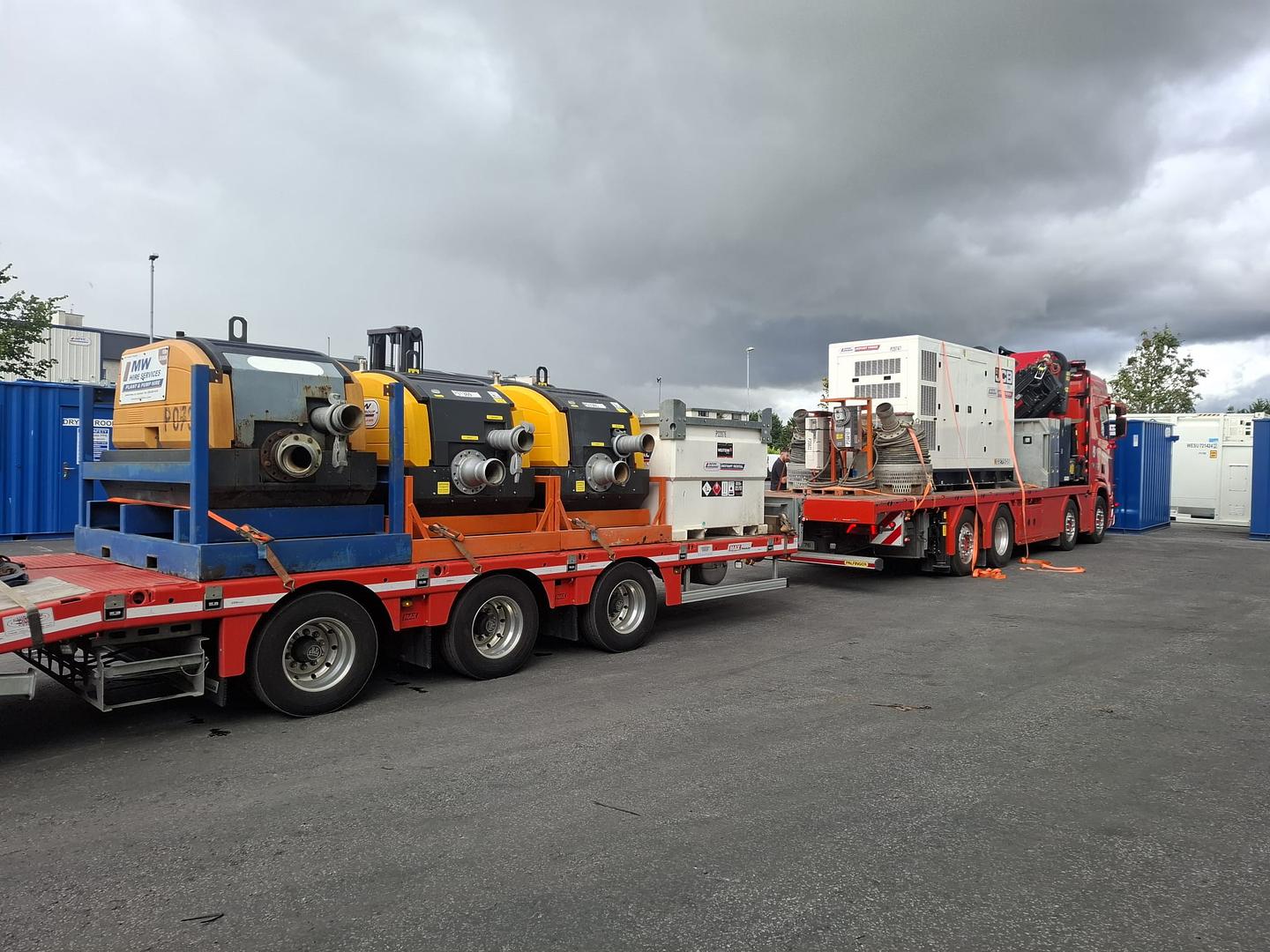
Diesel Pump vs Electric Submersible Pump: Which One Is Right for Your Application?
When it comes to moving water on construction sites, quarries, agricultural projects, flood situations, or industrial applications, choosing the right pump can have a significant impact on efficiency, running costs, and productivity. Two of the most common pumping solutions are diesel-driven surface pumps and electric submersible pumps. While both are designed to move water, they excel in very different situations.
Understanding when to use each type can help you avoid costly downtime and ensure your project runs smoothly.
What Is a Diesel Pump?
A diesel pump is a surface-mounted pump powered by a diesel engine. The pump remains above ground while a suction hose draws water from the source and discharges it to the required location.
Diesel pumps are commonly used on construction sites, infrastructure projects, emergency flood response operations, and agricultural applications where electrical power is unavailable or impractical.
Key Advantages of Diesel Pumps
Ideal for Remote Locations
One of the biggest benefits of a diesel pump is its independence from mains power. If you're working on a remote construction site, quarry, forestry project, or agricultural field, a diesel pump can operate virtually anywhere as long as fuel is available.
High Flow Rates
Diesel pumps are designed to move large volumes of water quickly. This makes them particularly effective for site dewatering, flood water removal, irrigation projects, and water transfer applications. Where speed and volume are the primary requirements, diesel pumps are often the preferred option.
Easy Mobility
Many diesel pumps are mounted on frames, skids, or trailers, making them easy to transport between job sites. This flexibility is invaluable for contractors managing multiple projects.
Reliable During Emergencies
During power outages caused by storms or flooding, diesel pumps can continue working without interruption, making them a popular choice for emergency response teams and local authorities.
When Should You Choose a Diesel Pump?
A diesel pump is typically the best option when:
- No electrical power source is available.
- High flow rates are required.
- The pump needs to be moved regularly.
- Emergency pumping capabilities are needed.
- Large-scale dewatering operations are taking place.
What Is an Electric Submersible Pump?
An electric submersible pump is designed to operate fully submerged in the liquid being pumped. The motor and pump are housed in a sealed unit that sits directly in the water.
Unlike diesel pumps, submersible pumps push water rather than pull it, making them highly efficient and particularly suitable for deeper pumping applications.
Key Advantages of Electric Submersible Pumps
Excellent for Deep Water Applications
Because the pump operates underwater, it does not rely on suction lift limitations. This makes submersible pumps ideal for deep excavations, basements, shafts, wells, and sumps. Where water levels are significantly below ground level, a submersible pump will often outperform a surface-mounted diesel pump.
Quieter Operation
Electric submersible pumps generate significantly less noise than diesel-powered alternatives. This makes them particularly useful in residential areas, urban construction projects, schools, hospitals, and environmentally sensitive locations.
Lower Running Costs
Where mains electricity is available, electric submersible pumps generally cost less to operate than diesel pumps, especially over extended periods. There are also fewer routine maintenance requirements because there is no engine to service.
Efficient Continuous Operation
Submersible pumps are frequently used for long-term applications where continuous operation is required. Their design allows them to work efficiently for extended periods with minimal supervision.
When Should You Choose an Electric Submersible Pump?
An electric submersible pump is usually the better choice when:
- Electrical power is readily available.
- Water must be lifted from significant depths.
- Noise restrictions apply.
- Long-term pumping is required.
- Lower operating costs are a priority.
- Space around the pumping area is limited.
Key Differences Between Diesel Pumps and Electric Submersibles
A diesel pump is generally the better option when portability and independence from power supplies are essential. They are commonly chosen for temporary projects, emergency response situations, and large-scale water transfer applications.
Electric submersible pumps, on the other hand, are often the preferred solution for deeper excavations, permanent installations, and applications where low noise levels and energy efficiency are important. Because they operate directly within the water, they can handle situations where surface pumps may struggle with suction limitations.
In simple terms, diesel pumps offer flexibility and mobility, while electric submersible pumps deliver efficiency and performance in deeper pumping conditions.
Making the Right Choice
There is no one-size-fits-all solution when it comes to pumping equipment. The right choice depends on several factors, including site conditions, available power, pumping depth, noise restrictions, and project duration.
Choose a diesel pump when you need maximum flexibility, portability, and high-volume pumping in locations where electricity is not available.
Choose an electric submersible pump when you have access to power, need to pump from depth, want quieter operation, and are looking for a cost-effective long-term solution.
Final Thoughts
Selecting the correct pump can improve productivity, reduce operating costs, and minimise downtime. Before making a decision, consider the source of power, depth of water, required flow rate, and the length of time the pump will be operating.
By understanding the strengths of both diesel pumps and electric submersible pumps, you can ensure your project benefits from the most efficient and reliable pumping solution. Whether you need a robust diesel-driven pump for a remote construction site or an efficient electric submersible for long-term dewatering, choosing the right equipment from the outset will save time, money, and potential headaches down the line.