



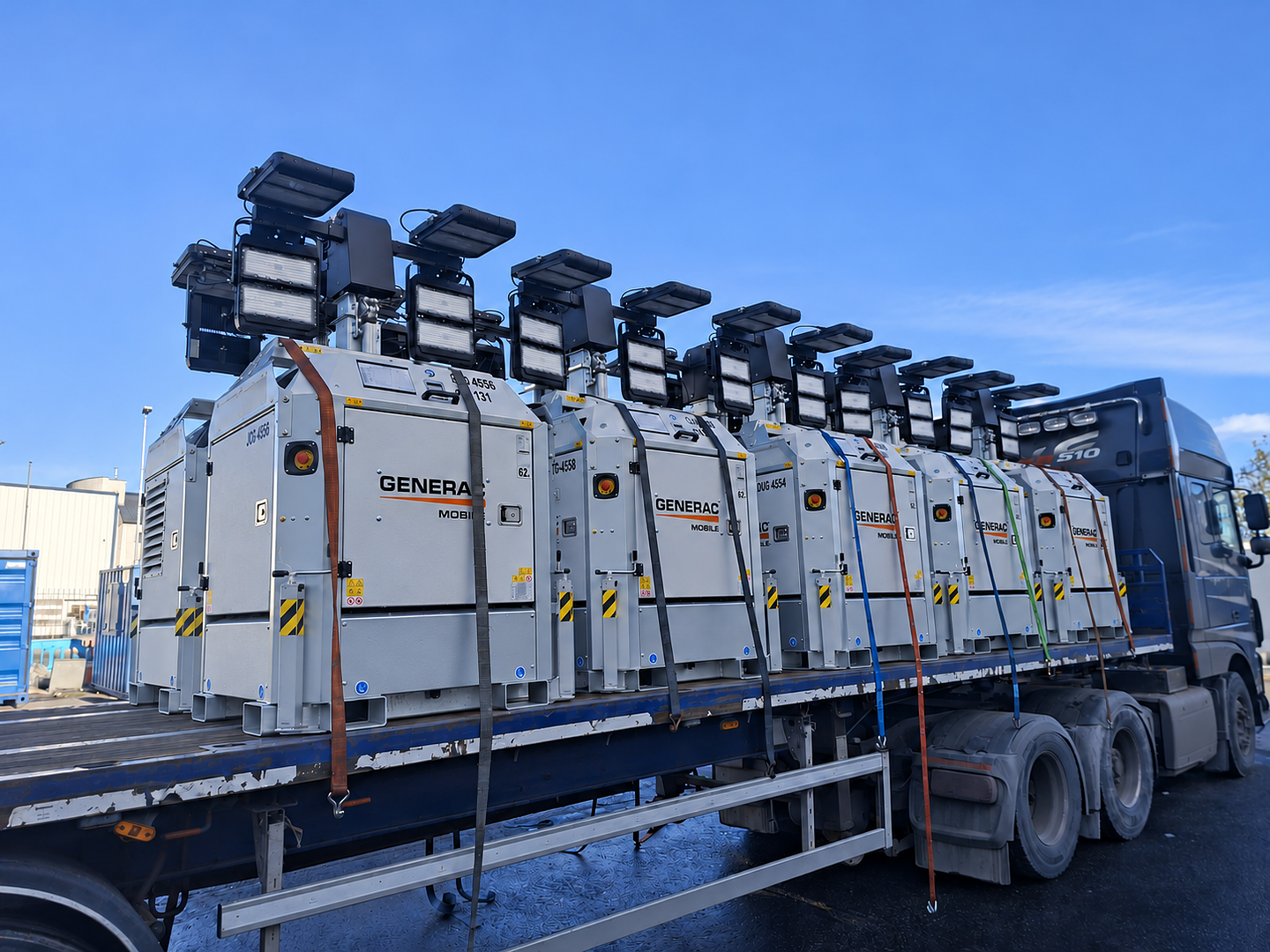
New Generac Cube + Lighting Towers - SOLD! Heading for Export
Published:
Tips for Picking a Lighting Tower for Hire: A Practical Guide for Safer, More Productive Sites
Choosing the right lighting tower for hire can make a measurable difference to safety, productivity, and compliance—whether you are managing a construction site, roadworks, an industrial shutdown, or an outdoor event. The best option is not always the biggest or brightest unit; it is the tower light rental that matches your site layout, power needs, operating hours, and local noise or emissions requirements.
Below are practical, field-tested tips to help you select the most suitable portable lighting tower hire for your job, avoid common oversights, and get the best value from your rental period.
1) Start With the Job: What Are You Lighting and Why?
Before comparing specifications, define the purpose of the lighting:
- Safety and access: walkways, site entrances, laydown areas, traffic routes, and emergency egress.
- Task lighting: detailed work zones such as formwork, paving, lifting operations, or maintenance bays.
- Security lighting: perimeter coverage and blind-spot reduction after hours.
- Event lighting: audience areas, vendor zones, car parks, and back-of-house operations.
Different objectives affect how much light you need, where you place towers, and whether glare control or low-noise operation is a priority.
2) Check Illumination Requirements (Not Just “Brightness”)
Lighting towers are often advertised by lamp wattage or lumen output, but on-site performance depends on how that light is distributed. Ask your hire provider about:
- Coverage area: typical square metres illuminated at a given level.
- Lux targets: average and minimum lux at working height for your application.
- Uniformity and glare: especially important for roadworks, traffic management, and events.
- Adjustability: ability to angle light heads independently to avoid spill and improve focus.
If your site must meet specific standards (for example, construction site lighting levels, traffic management plans, or event licensing conditions), share those with the supplier so they can recommend an appropriate lighting tower hire solution.
3) Choose the Right Power Type: Diesel, Solar, Hybrid, or Mains
The best power option depends on your runtime, location, and operating constraints.
Diesel lighting towers are common for demanding sites and long shifts. They offer dependable output and easy refuelling, but you should consider fuel logistics, noise, and emissions.
Solar lighting towers (often with battery storage) are ideal for lower-noise environments, overnight security lighting, or sustainability-focused projects. They can reduce fuel use dramatically, but performance depends on available sunlight and correct sizing for winter months.
Hybrid lighting towers combine solar/battery with a backup generator. They suit sites needing quiet operation most of the time with guaranteed uptime when weather is poor.
Mains-powered towers can be cost-effective where reliable grid power is available, eliminating refuelling and reducing maintenance. Confirm cable runs, protection, and distribution capacity.
4) Confirm Runtime, Fuel Tank Size, and Refuelling Practicalities
For generator-powered tower light rental, runtime is one of the most important factors for uninterrupted operations. Clarify:
- Hours of runtime at typical load (not just “maximum runtime” under ideal conditions).
- Fuel consumption per hour and expected fuel needs per shift/week.
- Refuelling access and whether the tower has bunding/spill containment features.
- Auto start/stop or light sensor controls to reduce unnecessary operating hours.
For solar and battery units, ask about battery capacity, expected run time per night, recharge time, and whether dimming modes are available.
5) Consider LED vs Metal Halide (Most Sites Now Prefer LED)
Many modern lighting towers use LED floodlights due to high efficiency and instant start. Compared to older metal halide systems, LED lighting towers typically offer:
- Lower fuel or power consumption for similar usable light.
- Instant on/off with no warm-up time.
- Longer lamp life and reduced maintenance during hire.
- Better control via directional aiming and optional dimming.
If you are hiring for short, intermittent shifts or areas where lights must be switched frequently, LED is usually the safer and more economical choice.
6) Match Mast Height, Wind Rating, and Site Conditions
Mast height influences coverage and shadowing. Taller is not always better if you are near overhead hazards or working in high-wind areas. Confirm:
- Maximum mast height and whether it is manual, hydraulic, or electric.
- Wind rating (operating and stowed), especially for exposed sites and coastal locations.
- Ground conditions and leveling requirements to keep the tower stable.
- Outriggers and stabilisation features, including interlocks and alarms.
For uneven terrain, a tower with robust leveling jacks and clear setup instructions can save time and reduce risk.
7) Think About Noise, Emissions, and Community Impact
If you are working near residential areas, hospitals, schools, or live events, noise and emissions can be the deciding factor. Ask the hire company about:
- Sound levels (dB) at a specified distance.
- Eco-mode features that reduce engine speed under lower loads.
- Emissions compliance relevant to your region and project requirements.
In many situations, solar or hybrid lighting tower hire can help meet noise restrictions while still delivering adequate coverage.
8) Prioritise Safety Features and Compliance
A quality lighting tower for hire should support safe operation and reduce the likelihood of incidents. Look for features such as:
- Emergency stop and clear control labelling.
- Auto shutdown protections for low oil pressure, high temperature, and overload.
- RCD/GFCI protection and weatherproof electrical connections where applicable.
- Forklift pockets and lifting points for safer handling and placement.
Also confirm inspection and maintenance processes: reputable rental suppliers will provide service records and ensure the unit is fit for hire.
9) Plan Transport, Placement, and Theft Deterrence
Practical logistics often determine whether a lighting tower rental is truly “easy” to use. Consider:
- Towable vs static units: towable towers are faster to reposition but may require suitable vehicles and trained operators.
- Site access: tight gates, soft ground, or restricted turning areas may favour compact units.
- Security: lockable covers, tamper-resistant panels, GPS tracking options, and stabiliser locks can reduce theft risk.
For multi-zone sites, it can be more effective to hire several smaller towers rather than one large unit, improving coverage and reducing dark spots.
10) Choose a Hire Partner That Supports You During the Rental
The best lighting tower hire experience depends on supplier capability as much as equipment quality. Before booking, confirm:
- Delivery and pickup options aligned to your site hours and access requirements.
- Setup guidance and operating instructions for your crew.
- Breakdown support and response times, particularly for night works.
- Flexible hire terms for project delays or scope changes.
Ask whether the provider can assist with a simple lighting plan—tower placement recommendations can improve uniformity and reduce the number of units required.
A Simple Checklist Before You Hire
To shortlist the right portable lighting tower, ensure you can answer these questions:
- What area needs lighting, and what lux level is required?
- How many hours per night and how many nights/weeks will it run?
- Is low noise or low emissions a must-have?
- Do you need LED, solar, hybrid, or diesel?
- Can the tower be safely transported, positioned, and stabilised on your site?
- What support will you receive if the unit needs servicing during the hire?
Final Thoughts
Picking the right lighting tower for hire is about balancing illumination performance with real-world constraints: power availability, runtime, noise, weather, safety, and logistics. By defining your lighting goals early and asking targeted questions about coverage, controls, and compliance, you can secure a tower light rental that keeps your site safe, meets operational demands, and avoids unexpected costs.
If you share your site dimensions, operating hours, and any noise or emissions requirements with your hire provider, they can recommend the most suitable lighting tower configuration and help you achieve consistent, reliable coverage.